As we enter the new year (Happy New Year to you!) and settle into the depth of winter, many horticultural therapy practitioners are looking for fresh inspiration and ways to continue connecting people meaningfully to nature, even when outdoor growing feels distant. I know I am!
As you read this blog post with a few programming ideas, I also invite you to pause and ask yourself a simple but powerful question: how do these activities connect to the goals you hold for your client group? Most of these winter programs can be adapted to support a wide range of goals and outcomes- but how you set them up matters.
For example, if you’re working on mobility or standing endurance, the same activity might shift from seated to standing, or involve participants gathering materials from another table or station. If your focus is on social connection, especially for isolated individuals, consider how you’re intentionally embedding time, prompts, or shared decision-making to encourage conversation and collective experience.
With that lens in mind, here are a variety of winter-friendly programs to consider, grouped by focus area.
Creative / Tabletop Activities
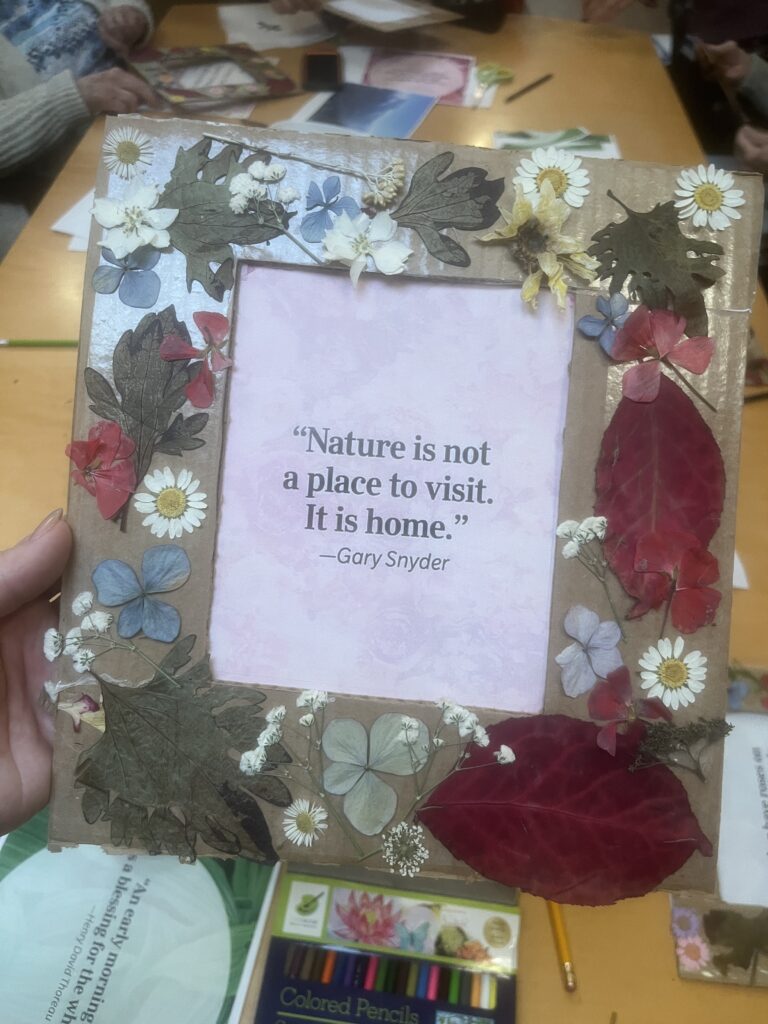
Nature Frames
Use pressed flowers or foliage on simple cardboard frames, paired with pre-printed nature quotes or photos participants can choose from (I’m no artist- so I’m sure some of you could make this project look quite a bit more aesthetic!) This program allows for autonomy, creative expression, and opportunities for reminiscence or storytelling.
Forest Floor Boards or Tablescapes
Create mini “forest floor scenes” using trays, shallow boxes, or even a unique piece of bark- covered and filled with natural materials. These can be highly sensory, collaborative, or quietly reflective depending on how the group is facilitated.
Winter Sachets
Simple sachets filled with spices, pine, or lavender offer sensory engagement and fine motor practice. These can also spark conversation around memory, scent, and seasonal traditions.
Horticulture & Plant-Focused Programs
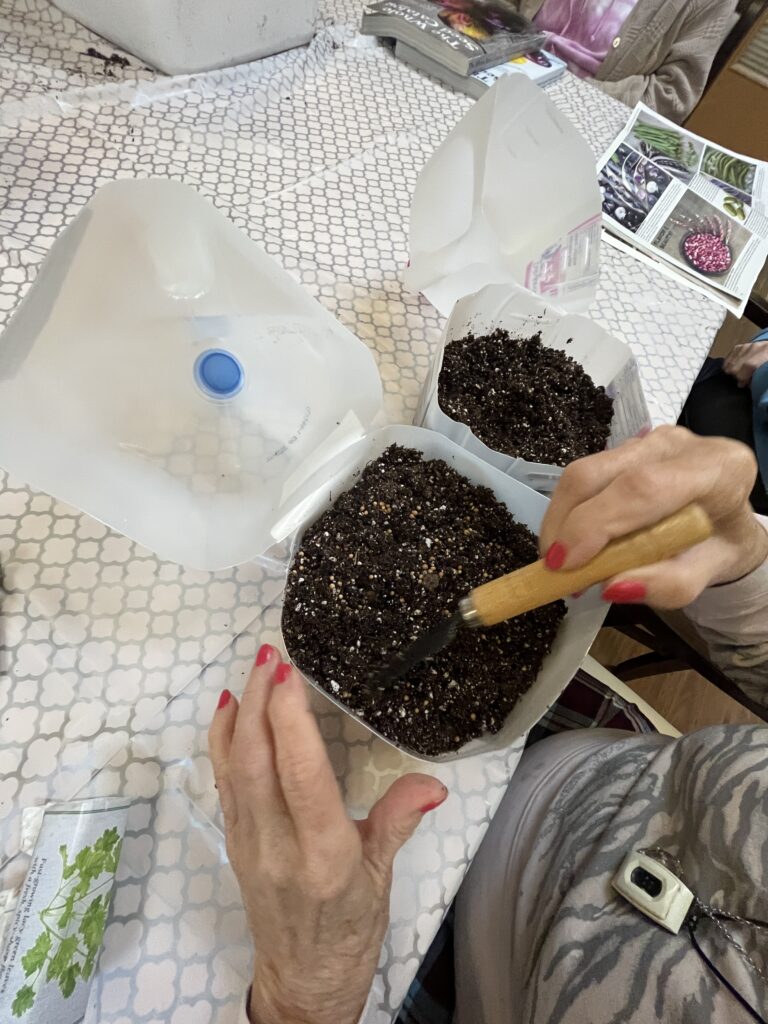
Winter Sowing in Milk Jugs
This is the perfect time to start perennials that require a cold stratification period. After planting indoors (I cut the jugs in half prior to the program, and then duct tape shut after planting), let the jugs outside and you’ll have incredibly resilient plant starts by spring. I also use this method for cold-loving vegetables and herbs like lettuce, spinach, bok choy, and cilantro.
Hydroponic Growing
I’ve been lucky enough to have a small hydroponic setup donated by a Canadian company, and it’s in constant use. It’s an excellent way to keep active growing happening year-round, while offering routine, observation, sensory stimulation (herbs!) and shared responsibility.
Tropical Propagation and Transplanting
During the slower garden months, I run a program called Houseplant Helpers, where indoor plants receive some well-deserved TLC. Propagation, pruning, and repotting are great for building confidence and skill.
Garden Planning & Prep
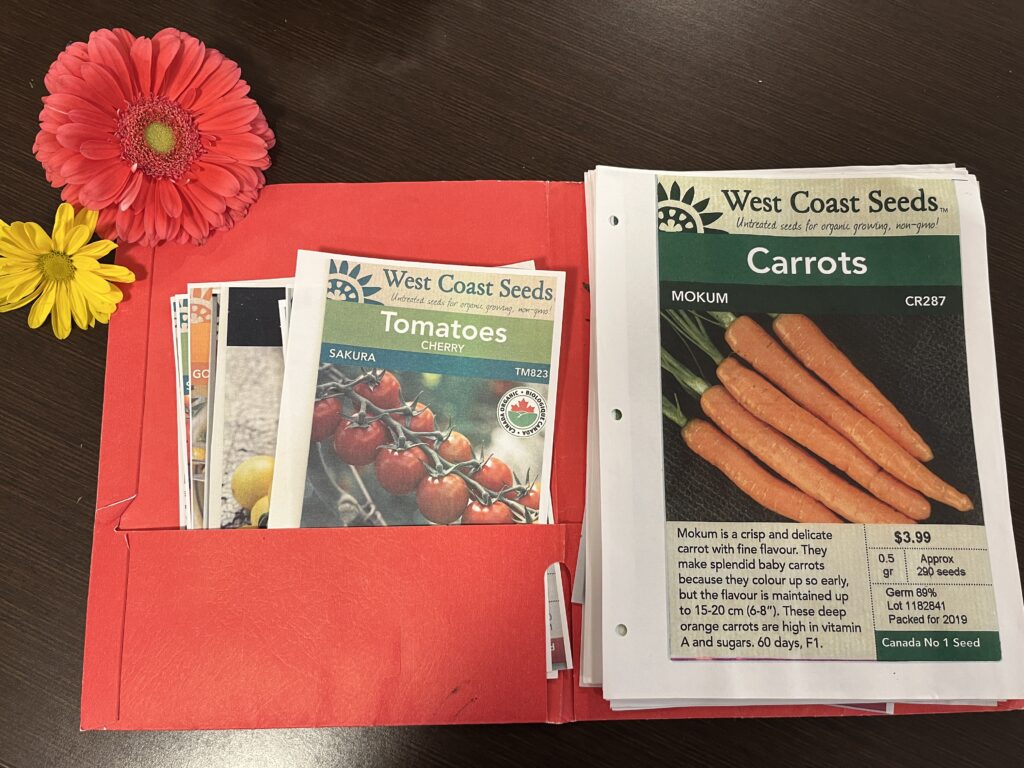
Use seed catalogues, enlarged seed packet prints, or photo prompts to brainstorm and plan for this next year’s garden! If the group is appropriate for it, you could also include a more reflective activity like a Personal Plant ID Card. Participants imagine themselves as a plant: considering their botanical ‘name’, growing habit, ideal exposure, root structure, needs, and colour. This can be both playful and deeply meaningful.
Sensory-Based Programs
Guess Who? Nature Bags
Participants feel mystery objects hidden in bags and guess what they are. This works well across cognitive levels and can easily be adapted for group discussion.
Ice Bird Treats
Freeze seeds, petals, or berries into ice shapes for wildlife. This activity combines sensory input, seasonal awareness, and purpose-driven action.
Cognitive & Writing-Based Programs
Seasonal Rules
Invite participants to write their own “rules” for experiencing the season (for example, In winter, I allow myself to slow down or To properly experience the joys of winter, one must…). This can be lighthearted or deeply reflective.
Nature Poetry & Prompts
Thanks to the inspiration and facilitation examples of a fellow HTR, Cliff Thorbes, I have been confident enough to explore nature poetry programs. Use prompts like Winter sounds like… or Winter feels like… and let the group build a collective poem or written collection together. The sense of surprise and accomplishment that comes out of these programs often moves me!
Group Story Writing with Nature Photo Prompts
Use images to spark imaginative storytelling. Prompt with questions such as:
What do you notice in this photo?
What do you think they’re doing?
What kind of day do you imagine this is?
This works beautifully for social engagement and shared creativity.
A Final Note: Seeds of Inspiration Resource!
If you’re looking for a planning tool with many more programs such as this, I want to share a resource I’ve personally relied on for years- Seeds of Inspiration: A Horticultural Therapy Program List.
I’ve slowly built up what was once a chicken-scratch/ post-it note collection into an ever-growing collection of program ideas. I’ve used this list to plan my month ahead, structure individual sessions, or simply find some Monday morning inspiration. After years of use, I’m excited to share it with others.
Designed to inspire sensory, seasonal, and meaningful engagement, this resource includes over 150 activity ideas that can be adapted across ages, settings, and goals. While it’s not a replacement for formal program plans by any means (hopefully that resource is still to come!), it’s incredibly helpful on days when you need a spark to get started.
You can learn more or purchase it here: https://bvhorticulturaltherapy.com/seeds-of-inspiration