Research continues to affirm what you like already sense intuitively: therapeutic gardens work best when the people who will use them help shape them.
A recent paper, From Yard to Healing Garden: The Role of Participatory Design in Shaping Therapeutic Landscapes (Saavedra & Covarrubias, 2026), highlights a clear pattern. When direct users are meaningfully included in the design process, gardens are more closely aligned with real needs. These spaces are used more often, perceived as more therapeutic, and foster a stronger sense of ownership and belonging. In contrast, gardens designed primarily through institutional or staff perspectives often fall short, resulting in underuse or limited therapeutic impact.
Put simply, when participants are not meaningfully involved in the design process, the spaces are less effective, and so is our work as professionals.
A Kiwanis Village Example
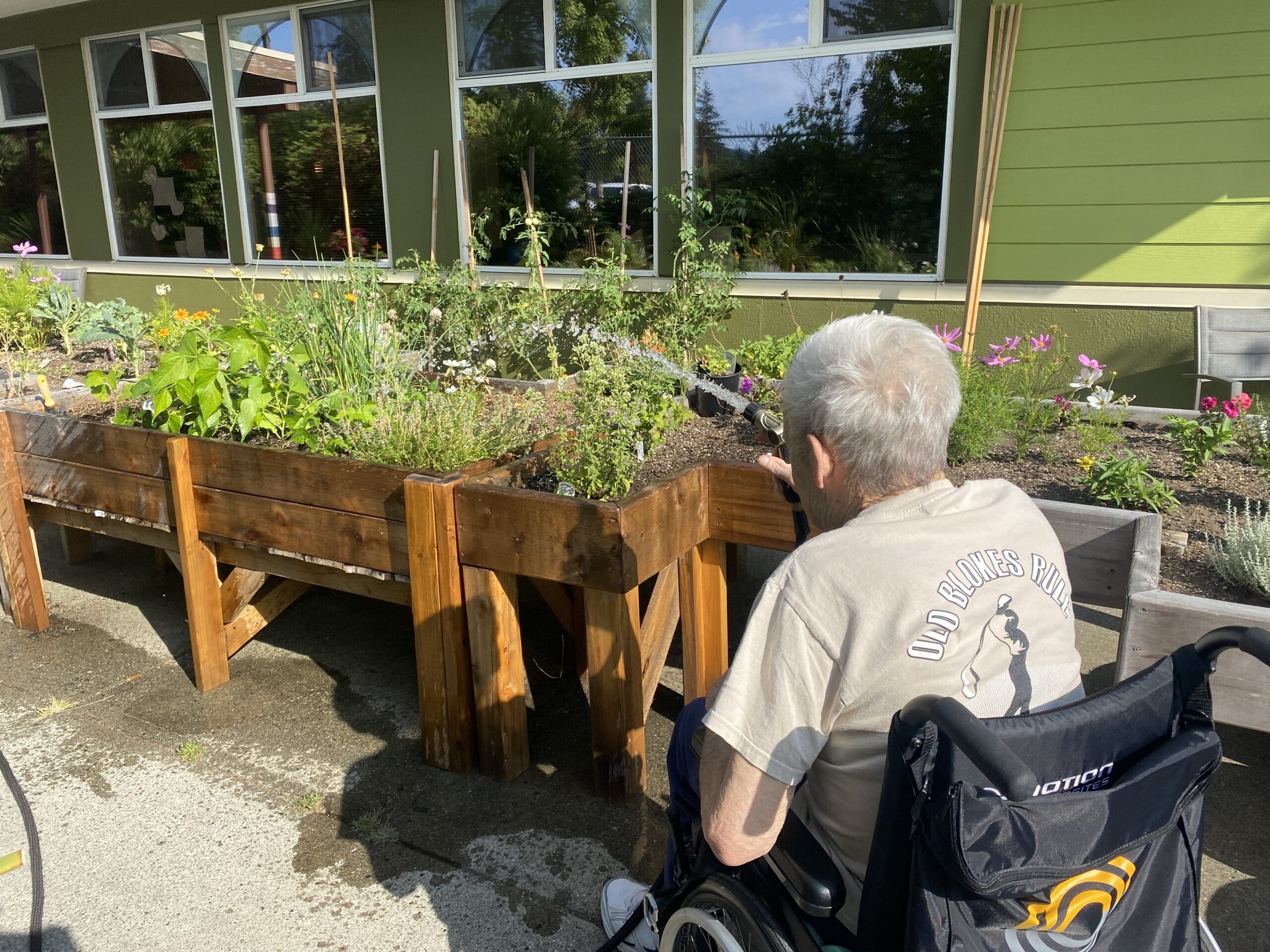
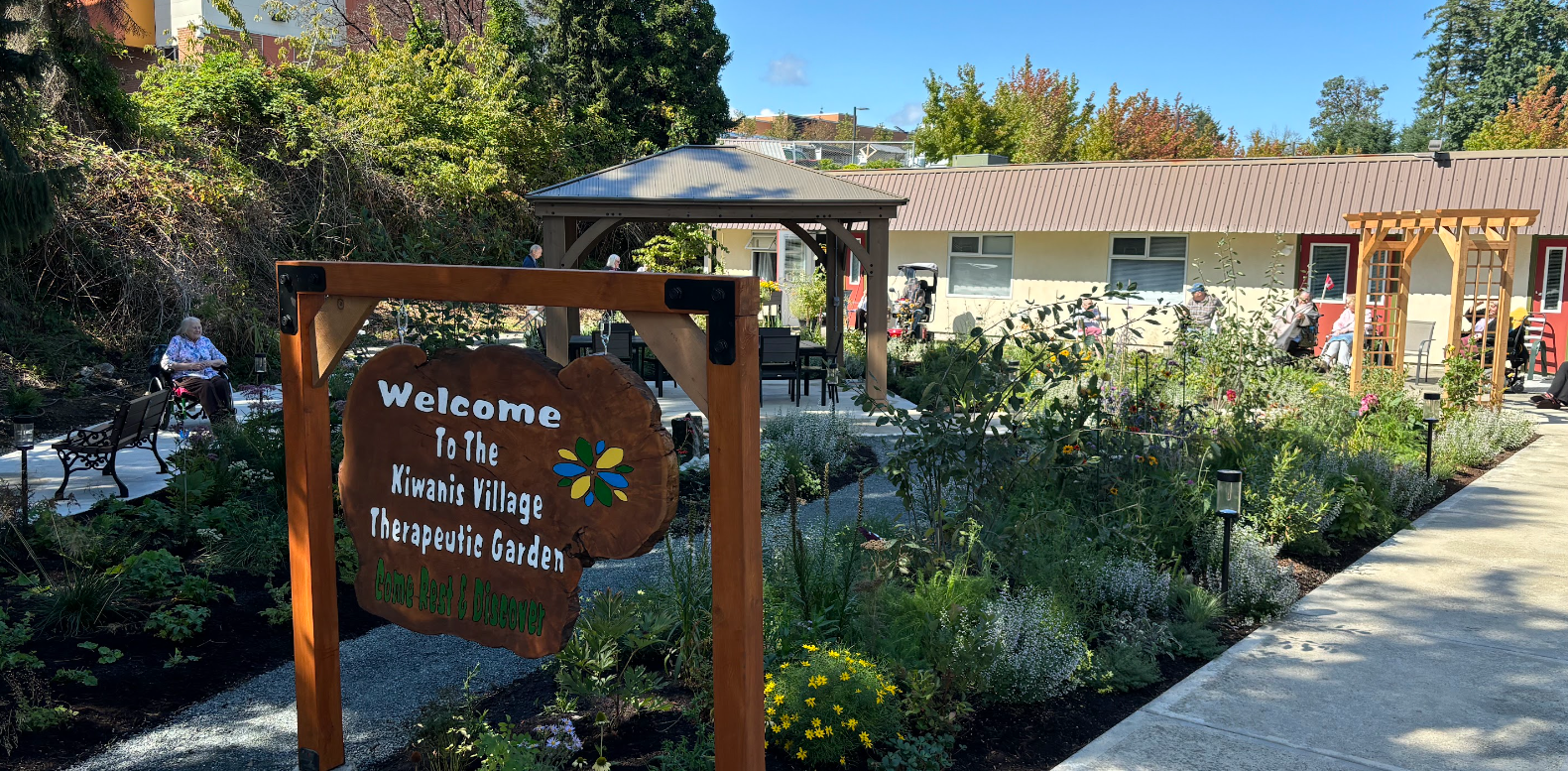
This research mirrors my own experience facilitating the community-led design process for the therapeutic garden design at Kiwanis Village in Nanaimo, BC. Rather than beginning with a predetermined design, we led with a 3 part series of participatory sessions to gather input directly from residents.
One of those sessions was intentionally simple and low-barrier: a post-it note exercise built around three questions:
- What do you want to see in this garden?
- What do you want to do in this garden?
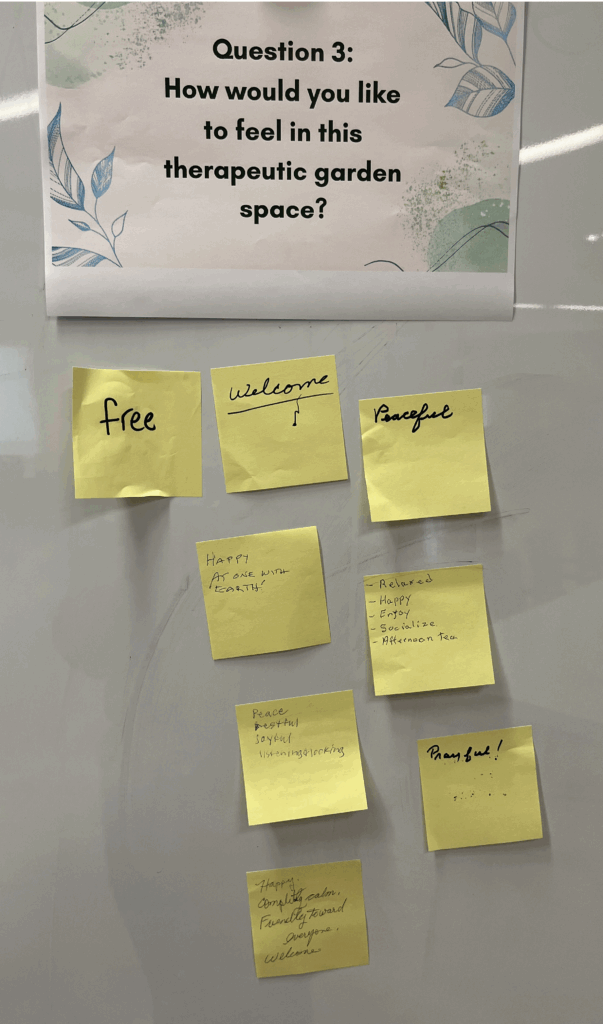
- What do you want to feel in this garden?
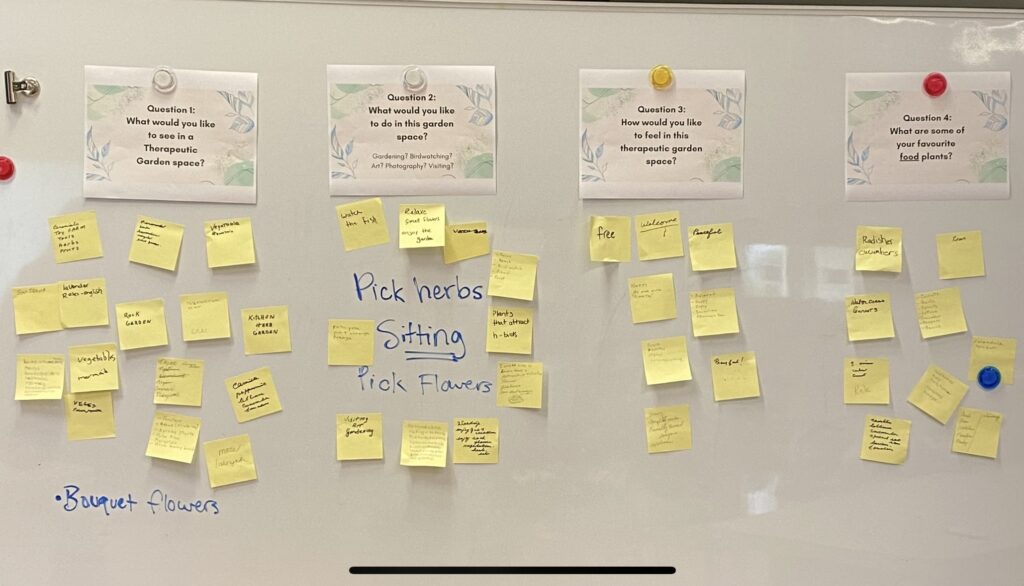
These prompts invited both practical and emotional responses, everything from requests for specific plants and seating to emotions folks hoped to feel in this space. The results directly informed layout decisions, plant selection, and more. The most surprising piece, that I found, from these workshops is that I would’ve thought participants wanted food growing opportunities- like raised beds or fruit trees- and that was NOT the case. I distinctly remember one person sharing, “I don’t want to enter this space and see work.” Instead, it became clear people wanted a space for reflection or pause, and they wanted to see pollinators and birds, and they wanted a space that felt immersive. That led us to choosing different heights in plants, and structuring seating in particular places.
Carrying Participatory Design Forward: Evanmore Acres
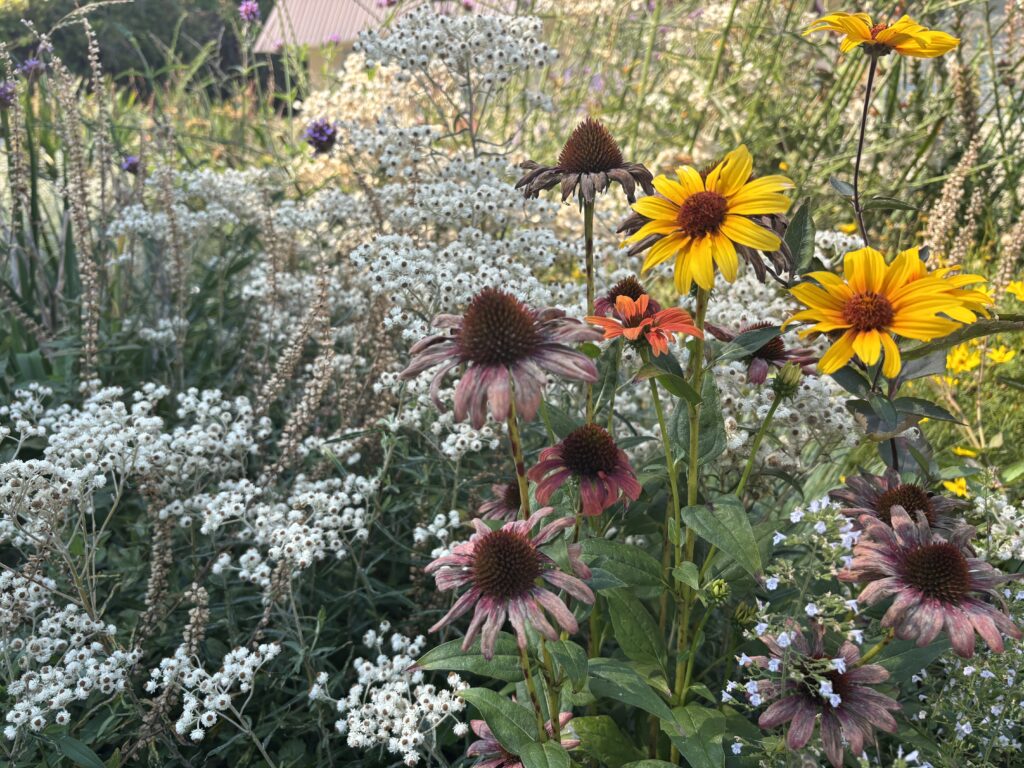
Participatory design continues to be a central part of my current work as we apply for grants and move toward finalizing the therapeutic garden at Evanmorr Acres, a farm supporting individuals living with diverse abilities through the Nanaimo Association for Community Living.
In this context, participation looks different. I work alongside some incredible individuals who are non-verbal, which means a written post-it note approach isn’t an accessible fit. So, the methods need to shift.
For this project, we’re planning to use:
- Photo walls with sticker voting
Participants can place stickers on images representing garden elements, activities, or sensory experiences they’re drawn to, offering clear, visual preference data without requiring verbal or written language. - Object-based choice making
Using physical materials (tools, textures, seed packets, natural objects) laid out on a table, participants can indicate interest through touch, selection, or repeated engagement. Observing what people return to, or avoid, provides meaningful design insight.
These approaches honour different communication styles while still centering the lived experience of future garden users.
Additional Participatory Workshop Strategies
There isn’t one ‘correct’ method for leading participatory design feedback sessions. In reality, strong participatory design is responsive, creative, and often iterative. The question isn’t “How do we get feedback?” but rather “How do people already express preference, comfort, curiosity, or agency, and how can design listen to that?”
Depending on the population, setting, and project phase, other participatory strategies might include:
- Guided walk-and-talks
Walking through an existing site and inviting real-time reactions to light, sound, access, and comfort. - Collage or vision-board sessions
Using images, colours, textures, and words to express desired mood and identity rather than specific features. - Scaled models or mapping
Allowing participants to move miniature objects on a base map to explore layout ideas. - Story-based prompts
Asking participants to describe a “good day in the garden” or “a place they feel most at ease,” then translating themes into design elements. - Care partner and staff reflection circles
When appropriate, pairing direct participant input with reflections from those who know their communication styles well.
Designing With, Not For
Participatory community design asks us to loosen control and design and move with the participants. And the payoff is substantial: gardens that are used, loved, respected, and genuinely therapeutic.
As both research and practice continue to show, the most healing landscapes can’t be designed for. The most healing spaces are grown, collaboratively, thoughtfully, and in relationship with the people who will call them their own.